Understanding solar energy doesn’t require an engineering degree or a background in physics. The path to becoming solar-savvy begins in your own community, where neighbors, local workshops, and accessible resources transform what seems like a complex technology into something remarkably straightforward. Whether you’re considering panels for your roof, advocating for solar-friendly policies in your town, or simply want to make informed decisions about renewable energy, the learning journey starts with conversations, not textbooks.
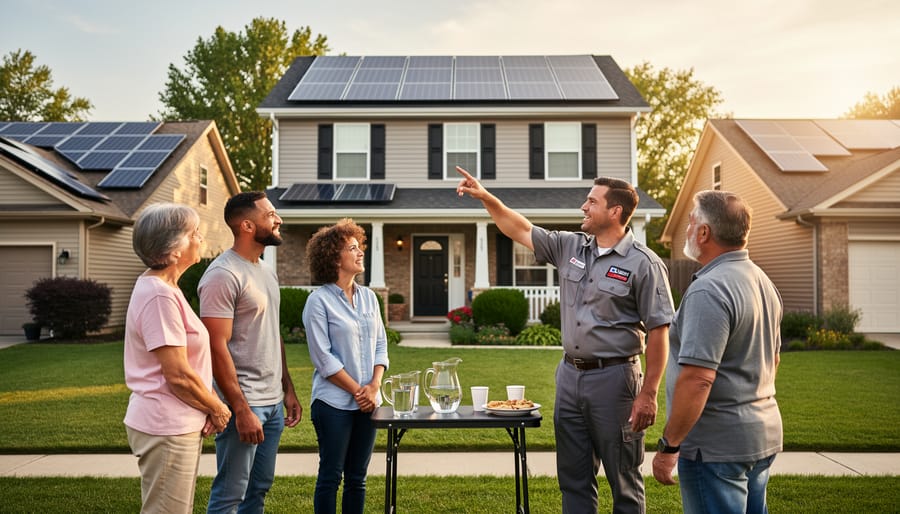
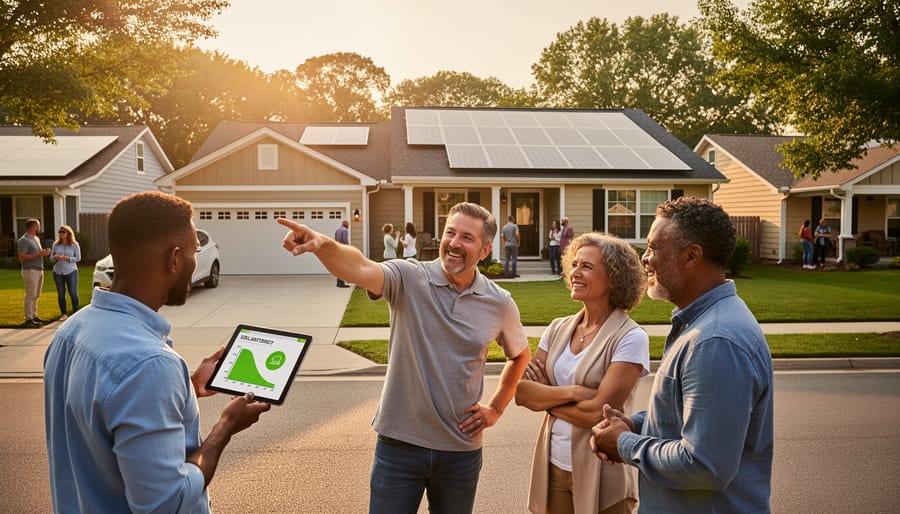
Community-driven education breaks down the barriers that make solar feel inaccessible. Local solar co-ops host informal gatherings where homeowners share real experiences about installation costs, energy savings, and working with contractors. Public libraries increasingly offer free workshops that cover everything from reading your electricity bill to understanding net metering policies. Municipal sustainability offices provide neighborhood tours of homes already using solar, letting you see actual systems in action and ask questions of people who’ve walked the path before you.
The beauty of community-based solar education lies in its practical focus. You learn what matters for your specific situation—whether your roof faces the right direction, how local incentives work, what financing options exist in your area, and which installation companies your neighbors trust. This knowledge empowers you to make confident decisions while contributing to a broader movement. When entire communities become educated about solar energy, individual choices multiply into collective impact, influencing local policy, driving down costs through group purchasing, and accelerating the transition to clean energy that benefits everyone.
Your solar education journey begins wherever you are, with whatever knowledge you currently have.
The Power of Community-Led Solar Education
Learning Together: The Neighborhood Advantage
There’s something powerful about learning alongside your neighbors that no amount of online research can replicate. When community members gather to explore solar energy together, they create a foundation of trust and shared understanding that transforms how people approach this important decision.
Community-based solar education brings homeowners face-to-face with real experiences from people they know and trust. Your neighbor down the street who installed panels last year becomes an invaluable resource, sharing honest insights about their installation process, actual energy savings, and unexpected benefits. These conversations happen naturally at community workshops, neighborhood meetings, or informal gatherings, creating opportunities to ask questions you might not even know you had.
This collective learning environment also builds confidence in ways that solitary research cannot. When you discover that others share your concerns about costs, installation logistics, or maintenance, the decision suddenly feels less overwhelming. Groups often negotiate better rates with installers, share recommendations for reliable contractors, and troubleshoot challenges together.
The neighborhood advantage extends beyond individual decisions. Communities that learn together often inspire policy changes, from streamlined permitting processes to local incentive programs. When informed residents speak with one voice, they create momentum for broader solar adoption. This ripple effect means your education journey contributes to making solar accessible for future neighbors, building a more sustainable community one conversation at a time.
From Skeptic to Advocate: Real Stories of Solar Education
Meet Jennifer from Portland, who once dismissed solar panels as “too complicated and expensive for regular people like me.” That changed when she attended a weekend workshop hosted by her neighborhood association. Through hands-on demonstrations and conversations with local solar users, Jennifer discovered that understanding solar energy didn’t require an engineering degree. The program walked her through real electricity bills, showed her how solar systems actually work using simple visual models, and connected her with homeowners who shared their genuine experiences. Within six months, Jennifer had solar panels installed and now volunteers at the same workshops that transformed her perspective.
Tom’s story from Austin follows a similar path. Initially skeptical about whether solar made financial sense, he joined a community learning circle where neighbors gathered monthly to explore renewable energy options together. The group reviewed financing options, invited installers for no-pressure Q&A sessions, and even toured each other’s homes to see different solar setups. This peer-to-peer learning environment gave Tom the confidence to ask questions without feeling intimidated. Today, he advocates for solar education programs at city council meetings, emphasizing how accessible information empowers communities to make informed energy choices.
These transformations highlight why community-based solar education matters. When learning happens in familiar, supportive environments with relatable teachers, solar energy shifts from an abstract concept to an achievable reality for everyday homeowners.
What Solar Education Actually Teaches You
Understanding Your Home’s Solar Potential
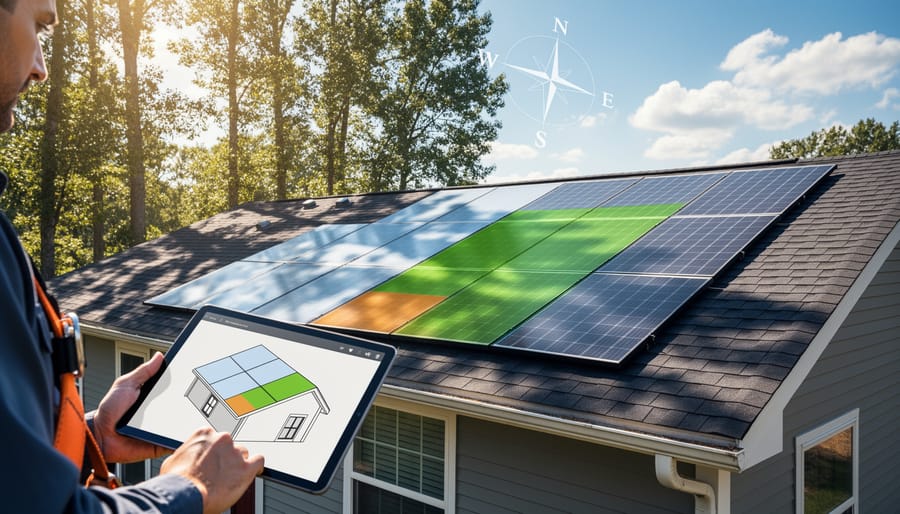
One of the most empowering aspects of solar education programs is learning to evaluate your home’s unique solar potential without needing an engineering degree. These programs guide you through understanding the key factors that determine whether solar makes sense for your situation, transforming what seems mysterious into straightforward observation.
Educational workshops and online resources teach you to look at your home through a new lens. You’ll learn why a south-facing roof typically captures more sunlight throughout the day, or how that beautiful oak tree might create shading patterns that affect panel placement. Community-based programs often include hands-on activities where neighbors learn together, using simple tools or smartphone apps to measure sun exposure during different seasons.
Understanding your energy usage patterns becomes equally accessible through education. Programs show you how to read your utility bills, identify your household’s peak consumption times, and estimate how many panels might offset your needs. Rather than drowning in kilowatt-hours and technical specifications, you’ll learn practical approaches like comparing your monthly usage to your roof’s available space.
Many educational initiatives also connect you with local success stories from homeowners with similar properties. Hearing how your neighbor with comparable shading challenges solved their solar puzzle provides real-world context that textbooks cannot. These programs emphasize that assessing solar potential is not about perfect conditions but understanding your specific circumstances well enough to make informed decisions that align with your sustainability goals and household needs.
Making Sense of the Numbers
One of the biggest hurdles homeowners face when considering solar energy isn’t the technology itself, but understanding the financial picture. The good news? Education transforms what seems like an overwhelming spreadsheet of numbers into a clear roadmap for your investment.
When you first explore solar, you’ll encounter terms like “system costs,” “tax credits,” and “payback periods.” Through community workshops and accessible online resources, these concepts become surprisingly straightforward. The upfront cost of a typical residential solar installation ranges from $15,000 to $25,000 before incentives, but educational programs help you discover the federal tax credit that can reduce this by 30 percent. Many states and local utilities offer additional rebates that further lower your investment.
Understanding your potential savings requires learning to read your electricity bills differently. Educational resources teach you how to calculate your current energy costs and project future savings based on your household’s consumption patterns. Most homeowners discover that solar systems pay for themselves within seven to twelve years, then provide free electricity for decades afterward.
Perhaps most empowering, education reveals how community knowledge-sharing helps you navigate financing options, from solar loans to power purchase agreements. When neighbors explain their experiences with local installers and real-world savings, the numbers stop feeling abstract. You’re not just crunching figures anymore; you’re seeing proven pathways that other families in your community have successfully traveled, making the financial decision feel achievable rather than intimidating.
The Environmental Story Behind Your Panels
Every solar panel you install tells a powerful environmental story. A typical residential solar system prevents approximately 3-4 tons of carbon emissions annually—equivalent to planting over 100 trees each year or taking a car off the road for months. When your neighbors see panels on your roof, they’re witnessing climate action in real-time.
These benefits multiply across communities. When you share your solar journey with friends or at community meetings, you inspire others to explore renewable energy. This ripple effect transforms individual choices into collective impact. Your solar panels don’t just power your home—they demonstrate that sustainable living is achievable and practical. By embracing solar education and sharing what you’ve learned, you become part of a growing movement reducing our carbon footprint one rooftop at a time, creating cleaner air and a healthier planet for future generations.
Where to Find Quality Solar Education in Your Community
Local Workshops and Open Houses
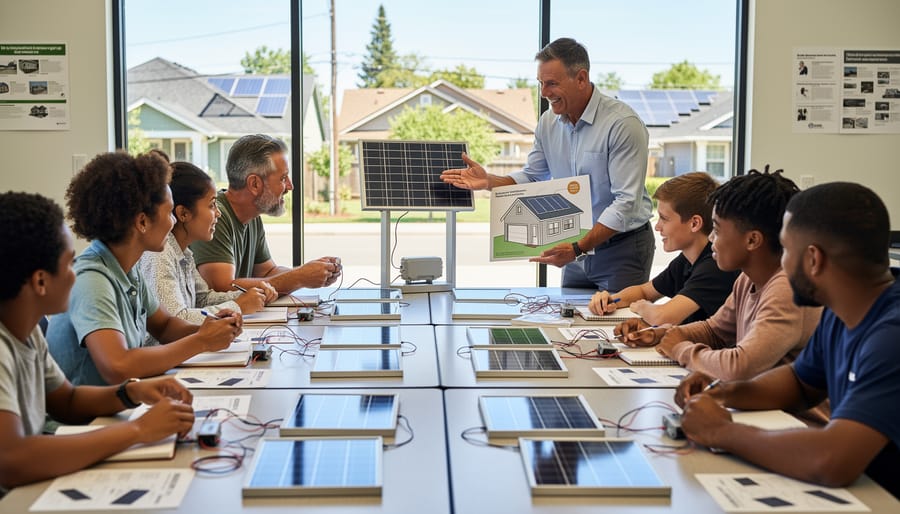
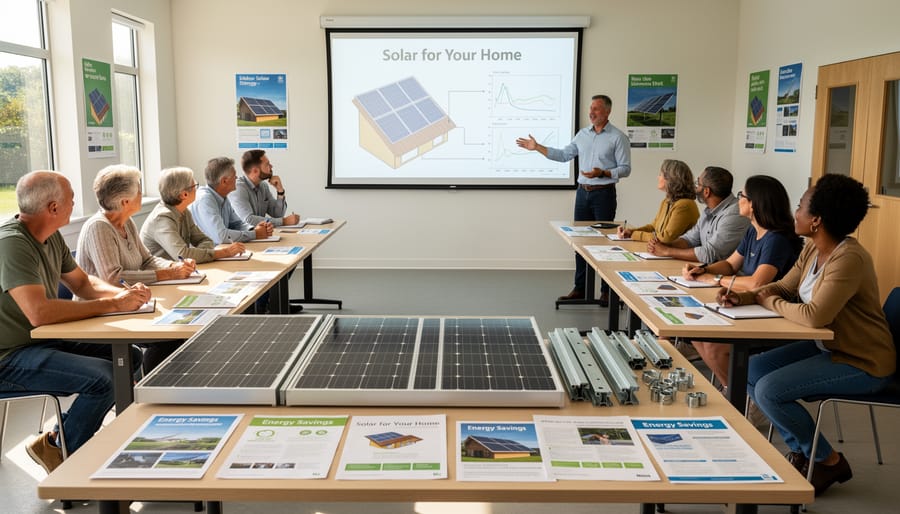
There’s something uniquely powerful about stepping into a room where solar panels are on display and neighbors share their real experiences. Local workshops and open houses transform solar energy from an abstract concept into something you can see, touch, and genuinely understand. These in-person events create welcoming spaces where you can examine actual solar equipment, ask installers your burning questions without pressure, and hear honest stories from homeowners who’ve already made the switch.
Community-driven events often feature live demonstrations that show how solar systems work in everyday settings. You’ll discover how panels convert sunlight into electricity through hands-on displays, learn about monitoring tools that track your energy production, and explore financing options tailored to your situation. The relaxed atmosphere encourages open dialogue, letting you voice concerns about roof compatibility, weather impacts, or maintenance requirements that might seem too basic to ask elsewhere.
Perhaps most valuable is the opportunity to connect with fellow community members who’ve navigated the solar journey themselves. Their firsthand insights about choosing installers, managing installations, and experiencing real savings offer perspectives no brochure can match. These gatherings foster a sense of collective learning that makes sustainable living feel achievable rather than overwhelming, building momentum for broader solar adoption throughout your neighborhood.
Digital Resources That Actually Help
Finding trustworthy online resources shouldn’t feel like searching for a needle in a haystack. Several platforms have emerged as genuine allies for solar newcomers. The Department of Energy’s Solar Energy Technologies Office offers free webinars and downloadable guides that translate complex concepts into everyday language. Their materials walk you through everything from understanding your energy bill to evaluating solar proposals.
For interactive learning, EnergySage provides a Solar Calculator and educational articles written specifically for homeowners. Their comparison tools help you understand local options without sales pressure. Meanwhile, organizations like Solar United Neighbors host free virtual workshops where community members share real experiences and ask questions in judgment-free spaces.
YouTube channels such as Solar Power World feature short, practical videos demonstrating installation processes and maintenance tips. The key is starting small—choose one trusted resource and explore it fully before adding others. Local libraries increasingly offer free access to renewable energy courses through platforms like Coursera or edX, making professional-grade education accessible to everyone. Remember, the best learning happens when information feels manageable, not overwhelming.
Your Utility Company Might Be Your Teacher
You might be surprised to learn that your local utility company could become one of your most valuable solar education resources. Many utilities have embraced renewable energy transitions and now offer free educational programs designed specifically for homeowners exploring solar options. These programs often include workshops covering everything from basic solar fundamentals to understanding your energy bill, making them perfect starting points for beginners.
Beyond classroom-style learning, some utilities provide complimentary site assessments to help you determine if your property is suitable for solar panels. These evaluations consider factors like roof orientation, shading, and local climate patterns. Even better, utility representatives can guide you through available incentives, rebates, and net metering policies that directly affect your bottom line. This personalized support removes much of the confusion around financial aspects of going solar. Check your utility’s website or call their customer service line to discover what educational resources and assessment services they offer in your community.
How Solar Education Influences Smarter Policy Decisions
When Homeowners Speak, Officials Listen
When community members understand solar energy deeply, they become powerful advocates for change in their neighborhoods. Educated homeowners are stepping into city council meetings, planning board hearings, and community forums armed with knowledge about renewable energy benefits, installation logistics, and economic impacts. Their voices carry weight because they speak from both personal experience and informed understanding.
Take Maria from suburban Denver, who attended free solar workshops hosted by her local library. She learned how outdated zoning codes prevented homeowners from installing ground-mounted panels despite having properties unsuitable for rooftop systems. Armed with data on property values and carbon reduction, she presented a compelling case to her town council. Within six months, the zoning ordinance was revised, opening solar access to hundreds of residents who previously had no options.
Similarly, neighborhood solar education groups across the country are influencing permit streamlining efforts. When homeowners collectively understand the permitting process, they can identify unnecessary bureaucratic hurdles and advocate for reforms. In Oregon, a coalition of educated residents successfully pushed for same-day permitting for standard residential installations, reducing costs and installation timelines dramatically.
These educated advocates also shape incentive programs by demonstrating community demand and articulating what support structures would genuinely accelerate adoption. Local officials increasingly recognize that informed constituents aren’t just asking for handouts—they’re partners in building resilient, sustainable communities. Your solar education journey equips you to become this kind of changemaker in your own community.
Building the Movement One Conversation at a Time
Every conversation about solar energy plants a seed that can grow into meaningful change. When you learn about renewable energy and share that knowledge with a neighbor over coffee, or discuss your solar installation experience at a community gathering, you’re doing more than exchanging information—you’re building momentum for a cleaner energy future.
This grassroots approach to solar education creates powerful ripple effects. A homeowner who attends a local solar workshop might inspire their book club to explore renewable options. A parent who learns about solar benefits at a school presentation could influence their workplace to consider sustainable practices. These individual moments of learning and sharing accumulate, creating networks of informed advocates who understand both the environmental benefits and practical considerations of solar energy.
Community-driven education also influences policy by creating constituencies who can speak knowledgeably about renewable energy needs and opportunities. When local leaders hear consistent, informed voices supporting solar initiatives, they’re more likely to prioritize policies that expand access and education.
The beauty of this movement-building approach is its accessibility. You don’t need to be an expert—just someone willing to learn, ask questions, and share your journey toward sustainable living with others in your community.
Starting Your Solar Education Journey Today
The path to solar energy begins not with panels on your roof, but with knowledge in your mind. Taking that first educational step might feel daunting, but the beauty of solar learning is that it meets you exactly where you are. Whether you have five minutes or five hours, you can start building your understanding today.
Here’s how to launch your solar education journey right now:
- Start a conversation with a neighbor who already has solar panels. Their real-world experience offers invaluable insights that no website can replicate, and most solar homeowners are enthusiastic about sharing what they’ve learned.
- Attend a free community workshop or webinar. Many local utilities, environmental organizations, and community colleges offer introductory sessions designed specifically for beginners with no prior knowledge.
- Explore online resources from trusted organizations. Government sites, nonprofit clean energy groups, and educational institutions provide accurate, unbiased information without sales pressure.
- Join a community solar group or online forum. These spaces connect you with people asking the same questions you have, creating a supportive environment for learning together.
- Request information packets from local solar installers. Even if you’re not ready to buy, many companies provide educational materials that help you understand the basics of how solar works in your specific region.
The key is starting small and building momentum. You don’t need to become an expert overnight. Each conversation you have, each article you read, and each question you ask adds another piece to your understanding. Remember that education is the foundation for every successful solar decision, whether for your home or your community.
By prioritizing learning before commitment, you empower yourself to make choices aligned with your values, budget, and environmental goals. Your solar education journey is uniquely yours, and today is the perfect day to take that meaningful first step toward a brighter, more sustainable future.
Your journey into solar education is more than just learning about panels and inverters—it’s about claiming the power to shape your home’s future with confidence and purpose. When you understand how solar energy works, what financial incentives exist, and how systems perform in real-world conditions, you transform from a passive consumer into an empowered decision-maker. This knowledge becomes your compass, guiding choices that honor both your budget and your commitment to a healthier planet.
The beauty of solar education lies in its ripple effect. As you learn, you naturally become part of a growing community of informed advocates who share insights, celebrate successes, and support neighbors taking their first steps toward renewable energy. Your questions lead to conversations. Your experiences inspire others. Together, this collective wisdom strengthens communities and accelerates the transition to clean energy that benefits everyone.
Remember that learning about solar doesn’t require an engineering degree or weeks of intensive study. It starts with curiosity and a willingness to explore resources designed specifically for people like you—homeowners who care about making smart, sustainable choices. Whether you attend a local workshop, join an online community forum, or simply start asking questions of solar professionals, each step forward builds your confidence.
The future powered by sunshine begins with education today. Embrace the learning process, connect with others on similar journeys, and trust that informed decisions create lasting positive change for your home, your community, and our shared environment.