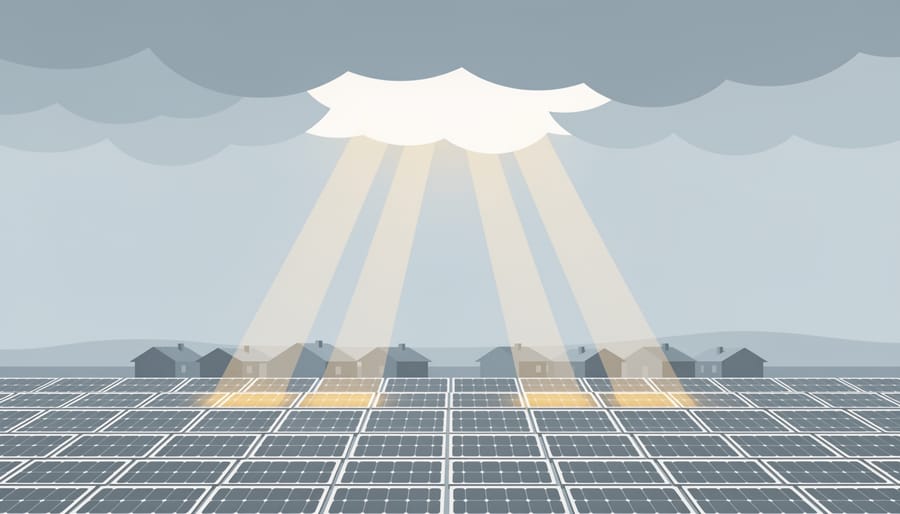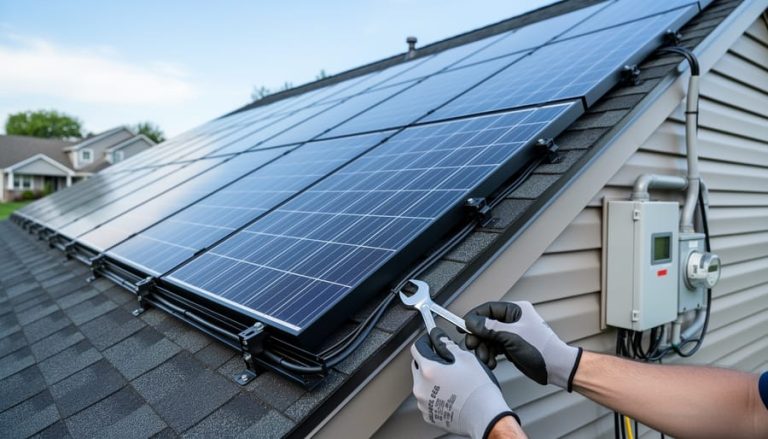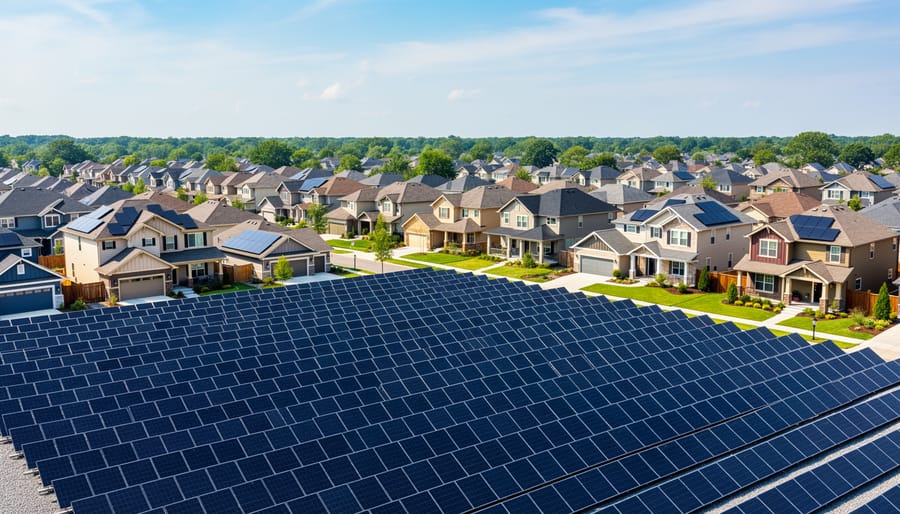
A solar community project allows you to access clean energy from a shared solar array without installing panels on your own property. You subscribe to a portion of a larger, centrally located solar installation and receive credits on your electricity bill for your share of the power generated, typically saving 5 to 15 percent on energy costs while supporting renewable infrastructure in your area.
This model has opened solar access to millions who were previously left out. Renters can’t modify their buildings. Homeowners with shaded roofs, older structures, or properties facing the wrong direction often find rooftop solar impractical or too expensive. Community solar removes these barriers entirely. Instead of navigating installation logistics, roof assessments, and upfront costs that can exceed $20,000, you simply sign up for a subscription with a local solar farm, much like joining a community-supported agriculture program.
The concept has grown rapidly because it delivers on two promises at once. Participants reduce their carbon footprint and lower their utility bills without the responsibility of owning or maintaining equipment. Communities gain local renewable energy capacity, create green jobs, and build resilience against rising energy costs. By 2026, hundreds of community solar projects operate across the country, serving neighborhoods from rural towns to urban apartment complexes.
Whether you’re motivated by environmental impact, practical savings, or both, community solar offers a straightforward entry point into renewable energy. Understanding how these projects work, what to look for in a subscription, and how to get involved will help you decide if this collective approach fits your goals and circumstances.
Why Your Neighborhood Needs a Solar Community Project
Community solar projects are rewriting the rules about who gets to benefit from clean energy. When neighbors pool their resources, the economics shift dramatically in favor of everyday homeowners. A single shared solar installation eliminates the need for each household to shoulder the full cost of panels, inverters, and installation. That shared infrastructure cost savings typically translates to electricity bill reductions of 5 to 15 percent for participants, without any upfront investment or roof work.
The access advantage matters even more than the savings for many households. Renters represent nearly 40 percent of U.S. housing, and they’ve historically been locked out of solar entirely. Community projects change that by disconnecting solar access from property ownership. Your lease agreement no longer determines whether you can switch to renewable energy. The same logic applies to homeowners with shaded yards, aging roofs, or HOA restrictions, obstacles that would normally end the solar conversation before it starts. Community solar means no rooftop needed so your housing situation stops being a barrier.
The environmental math gets compelling when you zoom out. A single community solar array serving 200 households prevents roughly 300 tons of carbon dioxide from entering the atmosphere each year. That’s equivalent to taking 65 cars off the road permanently. Individual rooftop installations achieve meaningful impact one home at a time, but community projects scale that impact across entire neighborhoods simultaneously. The collective model also makes efficient use of land, a well-sited solar farm in an open field or on a commercial rooftop produces more energy per square foot than scattered residential installations ever could.
Perhaps most importantly, these projects prove that clean energy doesn’t require wealth or homeownership. They dismantle the perception that solar remains a luxury reserved for single-family homeowners with perfect south-facing roofs and disposable income. When your neighbor in the apartment building down the street subscribes to the same solar array as the family in the suburban house, that’s democratization in action. Community solar creates a path for everyone to participate in the energy transition, regardless of where they live or whether they own their home. The power of that inclusion extends beyond individual electricity bills, it builds momentum for broader adoption and sends a market signal that clean energy demand exists across all income levels and housing types.
How Solar Community Projects Actually Work
Community solar projects might sound complex, but the model is surprisingly straightforward once you understand the key players and how energy credits flow from the solar array to your utility bill.
The Basic Setup
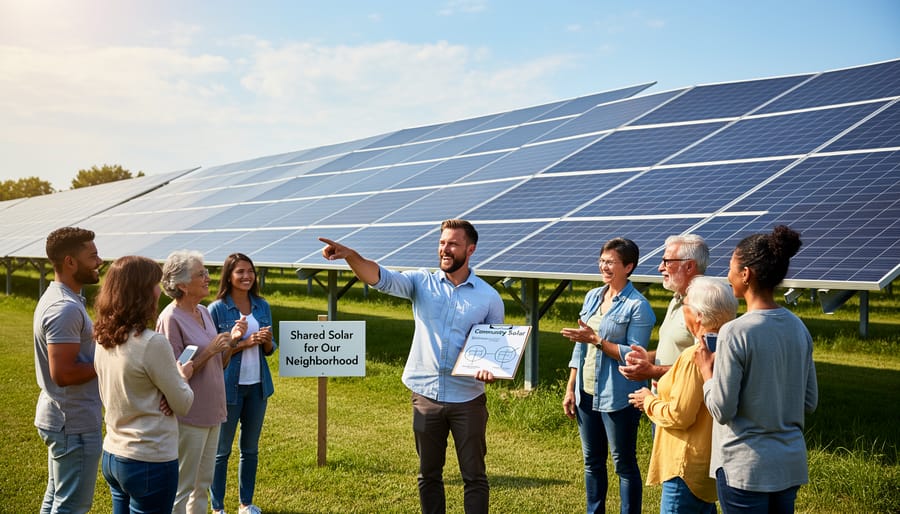
A community solar project starts when a developer identifies a suitable location, typically a parcel of land with good sun exposure and proximity to existing electrical infrastructure. Unlike rooftop installations constrained by individual property characteristics, these ground-mounted or large commercial-roof arrays can be optimized for maximum production. The developer handles financing, permitting, and construction, then manages ongoing operations.
Once operational, the solar array feeds electricity directly into the local grid through your utility’s existing power lines. This is where community solar differs from traditional electricity generation: the power doesn’t travel directly to your home. Instead, it enters the grid where your utility already distributes electricity to the entire service area.
How You Benefit Without Panels on Your Roof
The connection between the solar array and your household happens through virtual net metering or a similar crediting mechanism. When you subscribe to a portion of the community solar project, say, enough panels to cover 80% of your annual electricity use, you receive monthly credits on your utility bill proportional to your share of the project’s production.
Here’s what the process looks like from a homeowner’s perspective:
- You sign up as a subscriber, selecting a share size that matches your typical electricity consumption (the developer or program administrator can help you determine the right amount).
- Each month, the community solar array generates electricity that flows into the grid, and the utility tracks your proportional share of that production.
- You receive your regular utility bill showing the electricity you consumed from the grid, plus a separate line item crediting you for your share of the community solar generation.
- You pay the community solar subscription fee to the project developer or administrator, typically at a discount compared to what those credits are worth on your utility bill.
- Your net savings appear as the difference between the retail electricity credits you receive and the lower subscription rate you pay for community solar.
Most subscribers save 5 to 15% on their electricity costs without any upfront investment or equipment to maintain.
The Three-Way Relationship
Understanding the roles clarifies how everything works together. The project developer builds and operates the solar array, selling subscriptions to community members. Your utility continues delivering electricity to your home as always, while also administering the credit system that tracks solar production and applies it to subscriber bills. You remain a utility customer but add a subscription relationship with the solar project that reduces your overall electricity expenses.
This arrangement means you’re never without power if the solar array underperforms. Your utility provides electricity regardless, and your credits simply reflect whatever the community solar project actually generates each month. In sunny months, you might see larger credits; in cloudier periods, credits decrease proportionally, but your subscription fee typically adjusts to match.
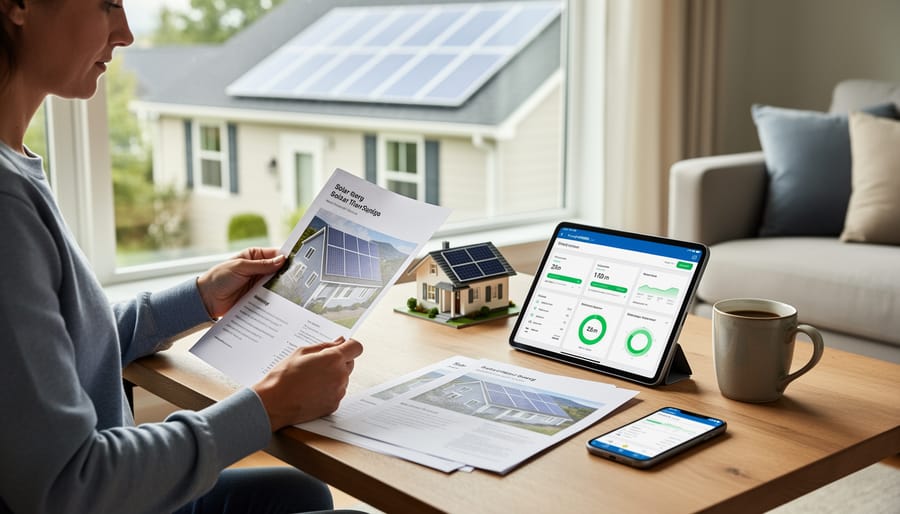
Real Stories from Communities Making Solar Work Together
When the residents of Decorah, Iowa, watched their local utility build a 5-megawatt solar array in 2021, they saw more than panels, they saw neighbors taking control of their energy future. Within six months, 450 households had subscribed to the project, collectively offsetting the carbon equivalent of planting 180,000 trees annually. What made it work? A core group of ten homeowners spent evenings at kitchen tables, mapping out subscription models and addressing neighbors’ concerns face-to-face.
In Denver’s Westwood neighborhood, a community solar project took a different path entirely. Residents there partnered with a local nonprofit to install panels on a former brownfield site that had sat vacant for years. The twist: they prioritized subscriptions for low-income households, with 60% of the energy credits going to families earning below the area median income. Three years in, participating households report average annual savings of $350 on electricity bills, money that’s stayed in the community rather than flowing to distant utility companies.
Not every project follows the same blueprint. A coalition of apartment dwellers in Portland, Oregon, frustrated by their inability to install rooftop solar, organized a subscription drive for an off-site array before a developer was even lined up. Their demonstrated demand, 120 committed subscribers, convinced a solar company to move forward with development. The lesson they learned: showing collective commitment opens doors that individual interest cannot.
The challenges these communities faced were real. Decorah’s organizers spent months deciphering utility interconnection agreements. Denver’s group navigated zoning restrictions and environmental assessments for their brownfield site. Portland’s residents dealt with subscriber turnover during the two-year development phase. But each obstacle became a teaching moment, documented and shared with other communities starting similar efforts.
These projects didn’t just reduce carbon emissions, they rebuilt social fabric. Neighbors who’d never spoken now coordinate subscriptions and share updates. Community meetings that once drew a dozen people now fill rooms, because residents have proven that collective action produces measurable results. The solar arrays generate clean energy, but the organizing process generates something equally valuable: proof that ordinary homeowners can reshape their energy landscape when they work together.
Getting Your Solar Community Project Off the Ground
Finding the Right Partners and Resources
Starting a solar community project becomes far more achievable when you connect with the right partners early on. The most successful projects typically involve a three-legged stool of support: an experienced solar developer, engaged community organizations, and helpful local government resources.
Solar developers bring the technical and financial expertise to make your project reality. Look for companies with a proven track record in community solar specifically, not just rooftop installations. Ask potential partners for references from other community projects they’ve completed, and verify their licensing and insurance. The best developers will patiently answer your questions and involve community members in key decisions rather than simply presenting a take-it-or-leave-it proposal.
Local nonprofits focused on sustainability, affordable housing, or neighborhood development can provide invaluable organizing support and help you reach residents who would benefit most from community solar. Many cities now have clean energy offices or sustainability coordinators who can connect you with grant opportunities, streamline permitting, and identify suitable sites on public land.
State energy offices often maintain directories of approved community solar developers and can explain which incentive programs your project qualifies for. Regional renewable energy associations provide networking opportunities and sometimes offer technical assistance grants.
The Solar Energy Industries Association and the Coalition for Community Solar Access maintain online resources specifically designed to help communities navigate the development process, including model contracts and policy toolkits you can adapt to your local context.
Navigating Policies and Incentives
The financial landscape for community solar has evolved significantly, making these projects more accessible than ever for everyday homeowners. At the federal level, community solar projects typically qualify for the Investment Tax Credit, which covers a substantial portion of upfront development costs, savings that get passed down to subscribers through reduced energy bills. Many states have layered additional incentives on top, creating pathways that weren’t available just a few years ago.
State-level programs vary widely in generosity and structure. Some offer renewable energy credits that directly reduce your electricity costs, while others provide upfront rebates or property tax exemptions for projects serving low-to-moderate income communities. California, New York, and Massachusetts lead with robust frameworks, but newer programs are emerging across the country as more legislators recognize community solar’s role in equitable energy access.
Local utilities sometimes offer their own incentives, though the landscape here can be frustratingly inconsistent. Some utilities actively support community solar through streamlined interconnection processes and favorable billing arrangements. Others maintain restrictive policies that slow project development. This is where community voices matter most.
When neighbors organize and speak up at utility commission hearings or contact local representatives, policy changes happen. Communities that have pushed for better virtual net metering rules or capacity caps often see improved project economics within a year or two. Your participation in a solar project doesn’t end with enrollment, staying informed about local energy policy and adding your voice to advocacy efforts helps create an environment where more projects can thrive and serve more households.
What to Watch Out For When Joining a Solar Community Project
Joining a solar community project can be a smart move for your wallet and the planet, but you’ll want to review the fine print before signing up. Most projects require multi-year commitments, typically 20 to 25 years, so understanding what you’re agreeing to matters just as much as the promised savings.
Start with the subscription agreement itself. Look for clarity on how your monthly credits are calculated and whether there’s a fixed discount rate or one that varies with utility prices. Some projects guarantee you’ll save a specific percentage off your regular electricity rate, while others offer credits that might fluctuate. Ask whether there’s an escalator clause that increases your subscription rate annually, and if so, by how much. The best agreements spell out exactly what you’ll pay and save in plain language, not buried in dense legal text.
Pay close attention to the terms if you move. Many community solar programs let you transfer your subscription to someone else or simply cancel without penalty, but others charge exit fees that can wipe out your accumulated savings. Find out upfront whether you can take your subscription to a new address within the same utility territory, and what happens if you move outside that zone entirely.
How long am I locked into a community solar contract?
Most contracts run 20-25 years, though some offer shorter terms or flexible cancellation policies. Always check exit terms before signing.
What happens to my subscription if I move?
Policies vary, some projects allow free transfers to new subscribers or let you move your subscription to a new address in the same utility area, while others may charge exit fees.
Are my savings guaranteed?
Reputable projects clearly state your discount rate or credit structure upfront. Be wary of vague savings promises or projections that seem too good to be true.
Verify the project’s credibility before committing. Check whether the developer has completed other community solar installations and ask for references from existing subscribers. A legitimate project will have transparent information about the solar array’s location, size, and expected production. If the developer can’t or won’t share these basics, that’s a red flag.
Watch for projects that pressure you to sign quickly or make unrealistic promises about savings. Solid community solar initiatives give you time to review contracts, answer all your questions, and provide clear documentation about how the program works. Trust your instincts, if something feels off or overly complicated, it probably is.
Solar community projects represent more than a workaround for people who can’t install rooftop panels. They’re a fundamental reimagining of how we build energy systems, one that prioritizes accessibility, shared prosperity, and neighborhood-level climate action. When you join a community solar project, you’re not just reducing your electricity bill or shrinking your carbon footprint, though you’ll do both. You’re participating in a model that proves clean energy doesn’t require privilege, perfect roof orientation, or homeownership.
The impact compounds quickly. Each subscriber strengthens the project’s economics, making future initiatives more viable. Each successful project demonstrates to policymakers and developers that communities want accessible solar options, spurring more investment and better programs. The collective shift toward renewable energy happens one neighborhood at a time, powered by homeowners who refused to accept “not possible” as an answer.
Whether you’re a renter in an apartment complex, a homeowner with a shaded lot, or someone who simply believes in the power of working together, there’s likely a solar community project that fits your situation. Start by researching options in your area, talking to neighbors about their interest, or contacting local solar advocates who can point you toward existing programs.
The solar-powered future we need won’t arrive through individual action alone. It’ll be built by communities that recognize their shared stake in a livable planet and take practical steps together to claim it.