
Imagine stepping off your flight in Orlando and boarding a shuttle powered partly by the Florida sunshine streaming overhead. Solar charging technology is transforming how airport transportation operates, combining practical convenience with environmental responsibility in ways that affect both travelers and local communities.
Solar-powered airport shuttles represent more than an eco-friendly alternative—they demonstrate how renewable energy works in demanding, real-world applications. These vehicles integrate rooftop solar panels with battery systems, capturing sunlight during Florida’s abundant sunny days to offset fuel consumption and reduce operating costs. The technology proves particularly effective in Orlando’s climate, where year-round sunshine provides consistent energy generation.
For travelers, these shuttles offer the same reliable service you expect while contributing to cleaner air quality around airports and hotels. The vehicles operate quietly, reduce emissions in high-traffic areas, and often feature modern amenities powered by their solar systems. Understanding how this technology performs in commercial settings provides valuable insights for anyone considering solar applications in their own lives.
The success of solar charging in airport transportation reveals important lessons about renewable energy’s practical versatility. When companies invest in solar-powered fleets, they’re proving the technology’s reliability under constant use and varied conditions. These same principles apply to residential solar installations, where homeowners can harness the same dependable energy source.
This real-world application of solar technology in orlando airport shuttle service operations offers a tangible example of sustainability in action, bridging the gap between commercial innovation and personal environmental choices.
The Solar Revolution Coming to Orlando’s Airport Transportation
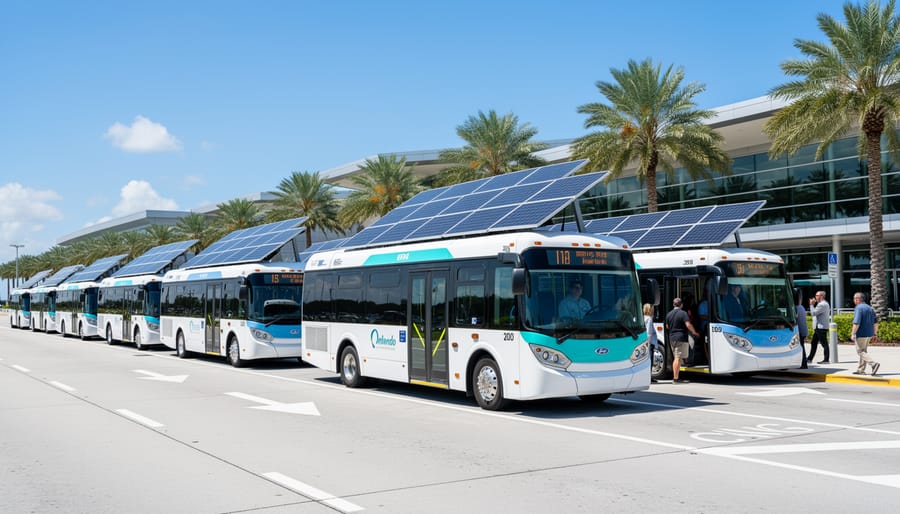
Why Orlando’s Sunshine is More Than Just Tourist Weather
Orlando isn’t just famous for theme parks and year-round warmth. The city enjoys approximately 233 sunny days each year, significantly above the national average of 205 days. This abundant sunshine translates into tremendous potential for solar energy generation, making it an ideal location for innovative applications like solar-powered airport shuttles.
What does this mean in practical terms? Central Florida receives about 5.5 peak sun hours daily on average, providing ample opportunity to charge electric shuttle fleets throughout the day. A typical solar canopy installed over shuttle parking areas can generate enough electricity to power multiple vehicles, reducing reliance on traditional grid power while cutting operational costs.
For shuttle operators serving Orlando International Airport, this sunshine advantage creates a win-win situation. The consistent solar exposure allows for reliable energy production, ensuring shuttles remain charged and ready for passengers. This same solar potential that powers commercial fleets is equally available to homeowners throughout the region, demonstrating how sunshine becomes a practical, everyday energy resource rather than just pleasant vacation weather. When communities embrace this abundant natural resource, everyone benefits from cleaner air and sustainable transportation options.
How Solar Charging Stations Actually Work
Solar charging stations for Orlando’s airport shuttles operate on a beautifully simple principle: large solar panels capture sunlight and convert it into electricity that powers the vehicles. During daylight hours, rooftop panels at shuttle facilities and parking areas collect energy, which either charges the shuttle batteries directly or gets stored in battery systems for later use.
Understanding how solar charging works becomes clear when you observe these stations firsthand. The charging infrastructure typically includes covered parking structures with solar canopies that serve double duty, generating clean energy while protecting vehicles from Florida’s intense sun and rain. Some systems even feed excess power back into the building’s electrical grid, reducing overall energy costs.
For travelers, the process is invisible but effective. Shuttles charge between runs or overnight, ensuring full battery capacity for daily operations. The technology mirrors residential solar systems but on a larger scale, demonstrating how renewable energy seamlessly integrates into everyday transportation. This real-world application shows communities and homeowners that solar charging isn’t futuristic technology but a practical, working solution available today.
What This Means for Your Next Airport Trip
Cleaner Rides Without the Premium Price Tag
One of the most surprising benefits of solar-powered airport shuttles is their ability to offer competitive rates without sacrificing quality or comfort. By harnessing free energy from the sun, these services dramatically reduce fuel costs, the single largest operating expense for traditional shuttle companies. These savings create room for lower fares or reinvestment in better vehicles and customer amenities.
Unlike conventional shuttles that face unpredictable fuel price fluctuations, solar-powered services maintain more stable pricing structures. This predictability benefits both operators and travelers, protecting riders from sudden fare increases when gas prices spike. For budget-conscious families and frequent travelers, this consistency makes trip planning easier and more affordable.
The environmental advantages come as a bonus rather than a premium. You get cleaner air, reduced carbon emissions, and support for renewable energy innovation without paying extra for the privilege. Many travelers find this combination particularly appealing, as it aligns with their values without stretching their budgets.
Community-minded shuttle operators often pass additional savings directly to customers through loyalty programs or discounted group rates. This approach demonstrates how sustainable business practices can create win-win situations, where environmental responsibility and economic accessibility work together rather than compete. The model proves that going green doesn’t require going broke, inspiring similar thinking for residential solar investments and other renewable energy applications in everyday life.
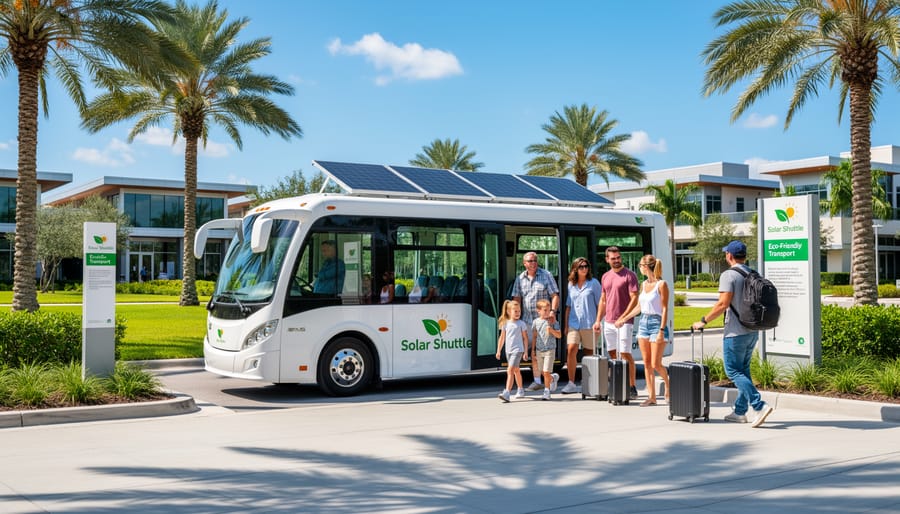
The Reliability Factor You Can Count On
One of the most common questions about solar-powered transportation is whether it works consistently, especially when your travel plans depend on it. The good news is that Orlando’s airport shuttle services using solar charging have built-in reliability measures that ensure you’re never left stranded.
Florida receives approximately 230 sunny days per year, making it an ideal location for solar energy applications. But what happens during cloudy days or after sunset? Modern solar charging systems incorporate battery storage that captures excess energy during peak sunlight hours, allowing shuttles to operate around the clock regardless of weather conditions.
These transportation services also maintain backup charging options through grid connections, creating a hybrid approach that guarantees service reliability. This dual-system design means shuttles can recharge even during extended periods of cloud cover, though Florida’s abundant sunshine makes this rarely necessary.
The infrastructure supporting these services has been carefully designed with redundancy in mind. Fleet operators monitor energy reserves in real-time and maintain charging schedules that ensure vehicles always have sufficient power for scheduled routes. This level of planning demonstrates how commercial solar applications can be just as dependable as traditional energy sources.
For travelers, this means booking a solar-powered shuttle carries no additional risk compared to conventional options. The technology has matured to the point where sustainability doesn’t require compromise on dependability, a lesson that translates well to residential solar considerations.
Private Shuttle Companies Leading the Charge
From Fuel Costs to Free Sunshine
The shift from traditional fuel to solar power creates compelling financial benefits for shuttle operators that ripple outward to passengers and the broader community. A typical shuttle van consuming diesel or gasoline can cost operators between $400 to $600 monthly in fuel alone. By contrast, solar charging stations harness free energy from Florida’s abundant sunshine, dramatically reducing these recurring expenses.
Orlando shuttle companies investing in solar infrastructure report fuel cost reductions exceeding 70% within the first year of operation. These savings don’t simply pad profit margins. Forward-thinking operators pass portions of these savings directly to travelers through competitive pricing, making sustainable transportation choices more accessible to everyone.
The economic advantages extend beyond immediate fuel savings. Solar charging systems require minimal maintenance compared to traditional fueling infrastructure, and federal tax incentives help offset initial installation costs. As more shuttle operators recognize these benefits, the competitive landscape shifts toward affordability and sustainability together.
This business model demonstrates how environmental responsibility and economic sense can work hand-in-hand. When shuttle companies save money through solar adoption, passengers enjoy lower fares, and the community benefits from cleaner air and reduced dependence on fossil fuels. It’s a practical example of how renewable energy creates value that touches everyone involved.
Meeting Customer Demand for Sustainable Options
Today’s travelers increasingly seek transportation options that reflect their environmental values. Recent surveys show that more than 70% of tourists consider sustainability when making travel decisions, with airport ground transportation emerging as a priority area for eco-conscious choices.
Shuttle companies serving Orlando International Airport have recognized this shift and are responding strategically. By investing in solar charging infrastructure and electric vehicle fleets, these businesses position themselves to capture a growing market segment willing to pay slightly more for sustainable services. This alignment between consumer demand and business innovation creates a win-win scenario where environmental responsibility also makes financial sense.
The response extends beyond simply adding solar panels. Forward-thinking shuttle operators are actively marketing their green credentials, sharing energy savings data with passengers, and educating travelers about how their transportation choice reduces carbon emissions. Some companies report that highlighting solar-powered operations has increased bookings among environmentally conscious travelers by over 30%.
This market-driven transition demonstrates how consumer preferences can accelerate sustainable practices. When communities prioritize eco-friendly options, businesses adapt and innovate, creating momentum that extends beyond airports into neighborhoods and residential applications. Your choices as a traveler genuinely influence how companies operate and invest in cleaner technology.
Lessons for Homeowners Considering Solar
If It Powers Shuttle Fleets, It Can Power Your Home
The same solar technology powering Orlando’s airport shuttle fleet can transform how you power your home and personal vehicles. What makes commercial solar installations successful—reliability, cost savings, and environmental benefits—translates beautifully to residential settings.
Homeowners across the country are discovering that solar panels aren’t just for large-scale operations. The proven performance of shuttle fleet charging stations demonstrates how solar energy handles demanding, real-world applications day after day. If solar can keep a fleet of shuttles running on schedule in Florida’s variable weather, it can certainly meet your household’s energy needs.
Installing solar panels at home opens opportunities beyond just powering lights and appliances. Many families are adding electric vehicle charging stations to their solar systems, creating a complete clean energy ecosystem. Imagine charging your car overnight using energy captured from the sun during the day, eliminating both your electricity bill and gas station visits.
The path to energy independence starts with understanding your home’s potential. You can determine if solar works for your specific situation by considering factors like roof orientation, local sunlight hours, and current energy usage.
Communities adopting residential solar create ripple effects that extend beyond individual households. As more neighbors install panels, installation costs decrease, local expertise grows, and policy makers take notice. This collective movement toward renewable energy strengthens grid resilience while reducing community-wide carbon emissions. The shuttle fleets rolling through Orlando represent more than transportation innovation—they’re proof that solar technology has matured into a practical, dependable solution ready for your home.

Florida Incentives That Make It Possible
Florida residents looking to follow the solar charging example set by innovative shuttle services can tap into excellent financial support. The state offers multiple programs that make residential solar installations increasingly affordable and accessible.
The federal Investment Tax Credit remains the cornerstone incentive, allowing homeowners to deduct 30% of their solar system costs from federal taxes through 2032. This substantial credit applies to equipment, installation, and related expenses, significantly reducing upfront investment.
Florida sweetens the deal with its Property Tax Exclusion for Residential Renewable Energy Property. This means your home’s assessed value won’t increase for property tax purposes when you add solar panels, protecting you from higher tax bills despite increasing your property’s actual value and appeal.
Additionally, Florida exempts solar equipment from state sales tax, saving residents roughly 6% on system purchases. These combined benefits create a financial landscape where solar becomes remarkably attainable for everyday homeowners.
Net metering programs across Florida utilities allow you to receive credits for excess electricity your panels generate, further improving your return on investment. Your system essentially runs backward during peak production, offsetting future consumption.
Local utilities and municipalities sometimes offer additional rebates or special programs, so connecting with your energy provider can reveal community-specific opportunities. Exploring various solar financing options alongside these incentives helps identify the pathway that works best for your household budget and sustainability goals, making clean energy accessible regardless of your starting point.
The Community Impact Beyond the Airport
Orlando’s solar-powered airport shuttles represent more than just eco-friendly transportation—they’re catalyzing positive change throughout the entire community. When major institutions like airports invest in renewable energy infrastructure, the benefits ripple outward in surprising ways.
One significant advantage is enhanced grid stability. The solar arrays powering these shuttles generate clean electricity during peak daytime hours, reducing strain on the regional power grid. When shuttles aren’t charging, excess energy can flow back into the community system, helping power nearby neighborhoods and businesses. This distributed energy approach builds resilience, particularly during Florida’s hurricane season when traditional power infrastructure faces challenges.
The economic impact extends well beyond fuel savings. Installing and maintaining solar charging stations creates local jobs in engineering, construction, and technology sectors. Technicians trained on airport systems often go on to serve residential and commercial clients, building expertise that strengthens the regional green economy. These positions offer meaningful career paths in a growing industry that values innovation and sustainability.
Perhaps most importantly, visible solar infrastructure at a major travel hub inspires broader adoption. When millions of travelers witness solar technology working reliably at scale, it demystifies renewable energy and sparks conversations. Visitors return home wondering if similar solutions could work for their communities. Homeowners discover connections to community solar initiatives and realize that participating in clean energy doesn’t always require installing panels on their own roofs.
This demonstration effect proves invaluable for advancing renewable energy awareness. When people see solar power handling real-world demands—transporting thousands of passengers daily—it transforms abstract environmental concepts into tangible, achievable solutions that benefit everyone.
Orlando’s solar-powered airport shuttles represent more than just a transportation option—they’re a tangible example of how renewable energy can seamlessly integrate into everyday services. Every time travelers choose these eco-friendly shuttles, they’re participating in a larger movement toward sustainable infrastructure. The benefits extend beyond reduced emissions; they demonstrate that solar technology works reliably in real-world applications, inspiring confidence in communities considering similar innovations.
For homeowners watching these shuttles glide through Orlando’s sunshine, there’s a powerful takeaway: if solar energy can power commercial fleets navigating daily schedules and passenger demands, it can certainly meet residential needs. The same sun that charges these vehicles can power your home, reduce electricity bills, and contribute to cleaner air in your neighborhood.
Policy makers should take note of Orlando’s success story. When municipalities invest in visible, public-facing solar projects like airport shuttles, they create ripple effects. Residents see solar technology in action, businesses recognize viable alternatives to traditional fuel sources, and communities begin conversations about broader renewable energy adoption.
Your individual choices matter profoundly. Supporting solar-powered services when traveling sends a clear market signal that sustainability matters to consumers. This demand encourages more businesses to explore renewable options, creating momentum that benefits everyone. Whether you’re boarding a solar shuttle at Orlando International Airport or considering panels for your own roof, you’re contributing to a collective future where clean energy isn’t exceptional—it’s expected. Together, these small decisions create the sustainable world we want to inhabit.