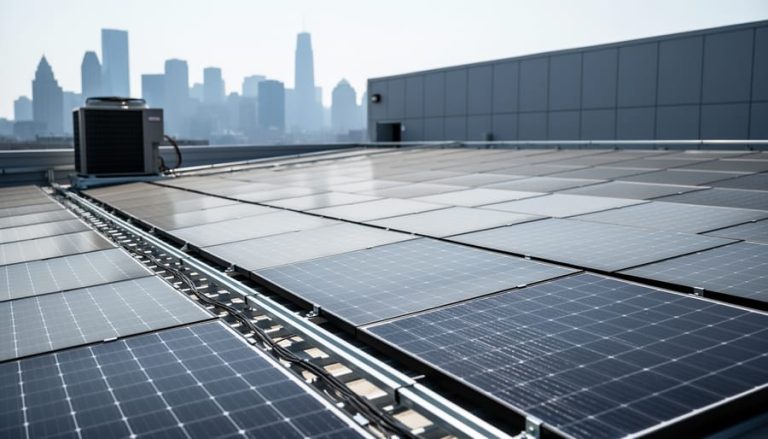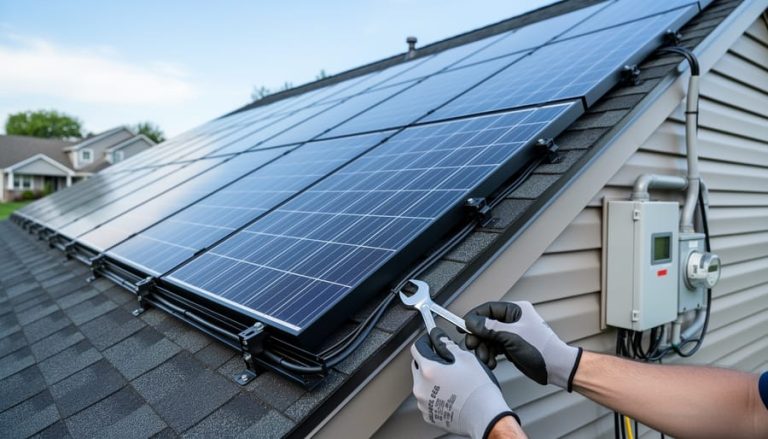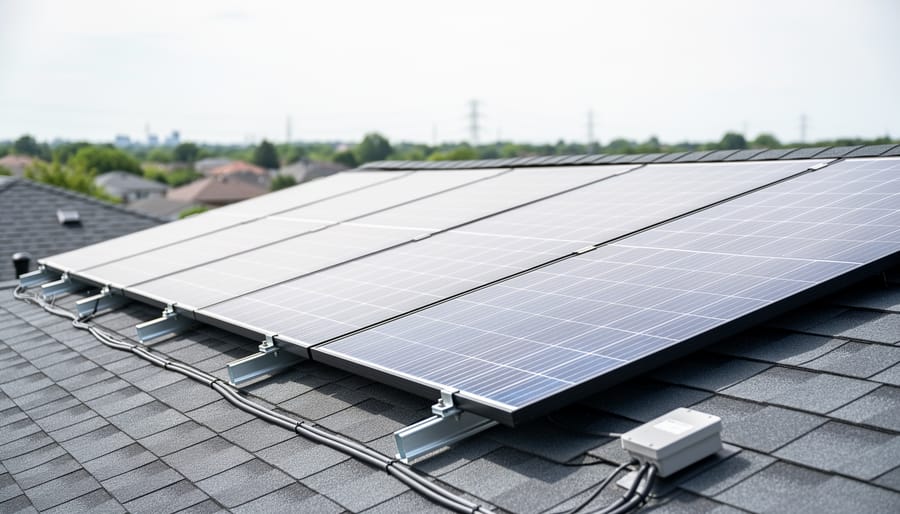
Rooftop solar installation costs between $2.58 and $2.75 per watt in 2026, translating to a total investment of roughly $21,816 to $31,135 before incentives for most residential systems. If you’re budgeting for solar, that baseline gives you a realistic starting point, but the final number shifts depending on system size, equipment quality, roof characteristics, and where you live.
Most homes need between 7.2 and 12 kilowatts of capacity to cover their electricity consumption, and that range explains why quoted prices can vary by tens of thousands of dollars even in the same neighborhood. System size drives the bulk of the cost, but panel efficiency, inverter type, labor rates, and permitting fees all play a role. A cash purchase comes in lower than financing, since loan interest can add several thousand dollars over the life of the agreement.
Understanding these numbers helps you plan confidently. Solar remains one of the few home improvements that pays for itself over time through energy savings and available tax credits, making it an achievable path toward energy independence. When you learn about solar costs upfront, you can compare quotes accurately, identify which variables matter most for your roof, and decide whether a DIY installation or professional crew makes sense for your project. The upfront price tag may feel steep, but breaking it down by component, size, and installation complexity reveals where your money goes and where you can control costs without sacrificing performance or safety.
How System Size Affects Your Total Investment
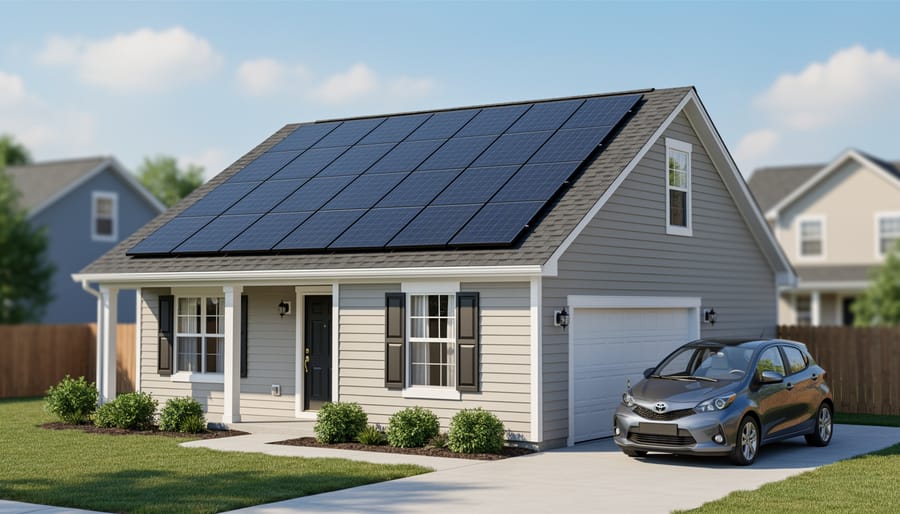
Your home’s electricity consumption dictates how large a solar system you need, and size is the single biggest factor determining your total investment. Solar capacity is measured in kilowatts (kW), representing how much power the panels can generate under ideal conditions. A larger array means more panels, more equipment, and more labor, scaling costs accordingly.
In 2026, residential solar systems average around $2.60 per watt before incentives. That rate stays fairly consistent whether you’re installing a compact 5 kW setup or a more robust 12 kW array, though individual quotes can range from $2.58 to $2.75 per watt depending on installer, equipment choices, and regional factors. The key is understanding that your total outlay grows in near-direct proportion to system capacity.
Most American homes fall into a predictable range of electricity needs. A 7.2 kW system typically covers the baseline consumption of a modestly sized household, costing about $21,816 when purchased with cash. That capacity produces roughly 8,000 to 10,000 kilowatt-hours annually in areas with decent sun exposure, enough for homes using 700 to 850 kWh per month. Larger households, those with electric vehicles, or properties in regions with heavier heating and cooling demands often need more capacity. A 12 kW system delivers that extra output but pushes the price up to approximately $31,135 before incentives, nearly 43% more than the smaller array.
Here’s how common system sizes compare in 2026:
| System Size | Cost Per Watt | Total Cost (Before Incentives) | Typical Coverage |
|---|---|---|---|
| 5 kW | $2.60 | $13,000 | Small home, low usage |
| 7.2 kW | $2.60 | $18,720 | Average household |
| 10 kW | $2.60 | $26,000 | Larger home or EV charging |
| 12 kW | $2.60 | $31,200 | High electricity use |
Sizing correctly saves money and frustration. An undersized system leaves you buying grid power indefinitely, while oversizing means paying for capacity you don’t use in most states without strong net metering programs. Review a full year of electricity bills to identify your average monthly consumption, then work with installers to match that usage to a system size that balances cost with your energy independence goals.
Where Your Solar Investment Goes: Cost Breakdown
Understanding where your money goes in a rooftop solar installation helps you recognize the value of each component and make informed decisions about your investment. At an average of around $2.60 per watt, a complete system involves far more than just the panels on your roof, it’s a sophisticated electrical system that requires quality equipment, skilled labor, and regulatory compliance.
The cost distribution across a typical residential solar installation breaks down into several distinct categories:
- Solar panels: 40-50% of total cost, converting sunlight into electricity
- Inverters: 10-15%, transforming DC power to usable AC electricity
- Mounting and racking hardware: 10%, securing panels safely to your roof structure
- Labor and installation: 15-25%, covering skilled technician time and expertise
- Permits and inspections: 5-10%, ensuring compliance with local building codes
- Balance of system components: remaining percentage, including wiring, disconnects, and monitoring equipment
For a typical 7.2 kW system averaging $21,816, the solar panels themselves represent roughly $8,700 to $10,900 of your investment. This includes high-efficiency photovoltaic modules engineered to withstand decades of exposure to weather while maintaining reliable output. The panels carry manufacturer warranties typically spanning 25 years, which justifies their substantial share of total cost.
Inverters, while representing a smaller percentage, perform the critical function of converting the direct current your panels produce into alternating current your home uses. Whether you choose a single string inverter or microinverters for each panel affects both this cost component and your system’s overall performance in shaded conditions.
The labor portion covers far more than physical installation. Professional installers design your system layout, ensure proper electrical connections that meet code requirements, coordinate inspections, and handle interconnection agreements with your utility company. This expertise prevents costly mistakes that could compromise safety or system performance.
Permitting and inspection fees vary significantly by location but represent an unavoidable cost of legal compliance. These fees fund the review process that confirms your installation meets fire safety standards, structural load requirements, and electrical codes, protecting both your investment and your community.
The remaining balance of system costs encompasses essential components like weatherproof wiring, rapid shutdown devices for firefighter safety, production monitoring systems, and the main electrical panel upgrades some homes require. These elements may seem invisible compared to the panels themselves, but they ensure your system operates safely and efficiently for decades.
What Drives Price Differences Between Installations
Equipment Choices and Quality Tiers
The choice between premium, mid-tier, and budget solar panels can swing your total project cost by $3,000 to $8,000 or more on a typical residential system. Premium panels from manufacturers like SunPower or Panasonic deliver higher efficiency ratings (22-23%), meaning you need fewer panels to generate the same power, but they command a price premium of $0.30 to $0.50 per watt over standard options. Mid-tier panels from brands like Q CELLS or Canadian Solar balance cost and performance well, typically falling in the $2.50 to $2.75 per watt range that aligns with current marketplace averages.
Inverter choice presents another cost-performance trade-off. String inverters represent the most economical option, adding roughly $1,000 to $2,000 to your system cost, but they treat all panels as a single unit, partial shading on one panel reduces output across the entire array. Microinverters, which optimize each panel individually, cost $2,500 to $4,000 more for a typical installation but deliver 5-12% higher energy production in partially shaded conditions and offer panel-level monitoring. Power optimizers split the difference in both cost and performance, pairing individual panel optimization with a central inverter at a moderate price premium of $1,500 to $2,500.
Roof Characteristics That Impact Installation
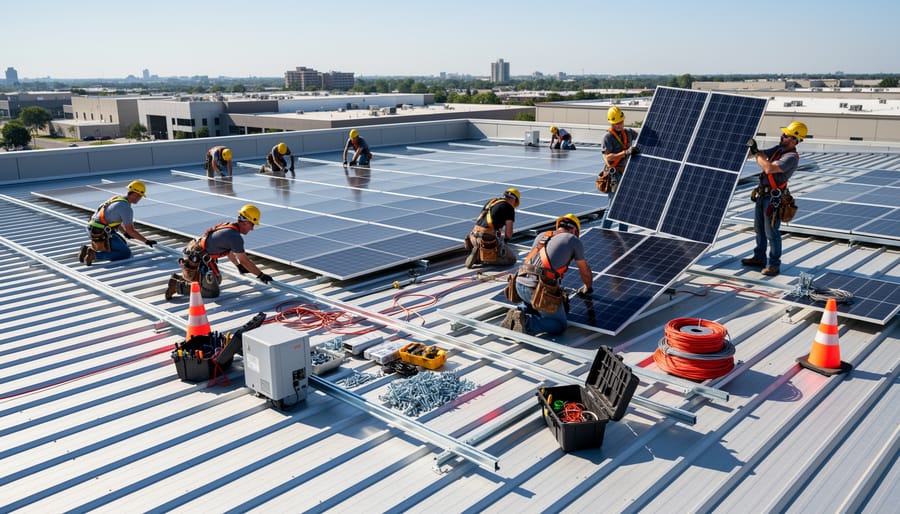
Your roof’s physical characteristics play a surprisingly large role in what you’ll pay for solar installation. A straightforward, south-facing roof with asphalt shingles and minimal obstructions typically keeps labor costs manageable, while a steep pitch, unusual materials, or multiple roof planes can add several thousand dollars to the final bill.
Pitch and accessibility matter immediately. Installers work more slowly, and charge accordingly, on roofs steeper than 6/12 pitch (six inches of rise per twelve inches of run). Extremely steep or multi-story roofs require additional safety equipment, scaffolding, and crew time. Conversely, flat roofs need specialized racking systems to achieve the proper panel angle, offsetting the easier access.
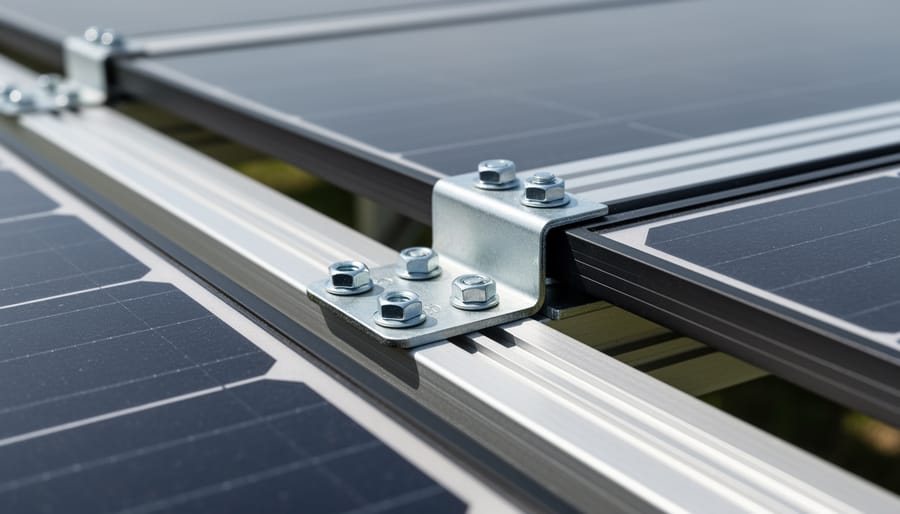
Roof material drives both mounting hardware choices and installation complexity. Asphalt shingles are the easiest surface; installers simply attach flashings and lag bolts through the sheathing. Tile, slate, or metal roofs demand specialized mounts and slower, more careful work to avoid cracking or voiding the roof warranty. Older or fragile roofing may need reinforcement or partial replacement before panels go up, another line item.
Complexity adds up fast. Dormers, skylights, chimneys, and vents force installers to work around obstacles, custom-cutting arrays and running longer conduit paths. A roof split across multiple planes requires separate strings of panels and more electrical connections. Each complication extends labor hours and material needs, pushing costs higher than a simple rectangular layout would demand.
Regional and Local Price Variations
Your zip code matters more than you might expect when budgeting for solar. Regional differences can shift typical installation costs by 20% or more, even for identical equipment.
Labor rates drive much of this variation. Metropolitan markets with higher wages, think Boston or San Francisco, naturally command premium installation prices, while smaller Midwestern towns often see lower per-watt costs. The EnergySage marketplace average hovers near $2.58 to $2.60 per watt in early 2026, but individual quotes routinely range from $2.58 to $2.75 depending on where installers operate.
Local permitting adds another layer. Some municipalities charge modest fees and process applications quickly; others require extensive documentation and impose steeper costs that installers pass along. States with aggressive solar targets tend to streamline permitting, while regions newer to residential solar may impose stricter reviews.
Market competition plays a role too. Areas with dozens of installers competing for business often yield better pricing than locations with only one or two providers. Check how many certified contractors serve your region, more competition usually means sharper quotes.
When you gather estimates, ask installers to itemize local permit fees and explain any location-specific labor adjustments. That transparency helps you separate unavoidable regional costs from negotiable charges.
Cash Purchase vs. Financing: How Payment Method Changes the Total
Choosing how to pay for your rooftop solar installation changes more than just the payment schedule, it directly affects your total cost and long-term financial outcome. A 7.2 kW system that costs $21,816 when purchased with cash reaches $26,004 when financed with a loan, a difference of $4,188 that represents the cost of interest over the loan term. Understanding these payment methods helps you choose the approach that best fits your financial situation and sustainability goals.
Cash Purchase: Lowest Total Cost
Paying cash delivers the most straightforward financial benefit. You own the system immediately, qualify for the full federal tax credit without complications, and avoid interest charges entirely. The $21,816 cash price for a 7.2 kW system represents your complete investment, no hidden fees or accumulating interest. Ownership also means you control the system, maintenance decisions, and any future upgrades without involving a lender or third party.
The trade-off is obvious: you need substantial available capital. Many homeowners find tying up $20,000+ in a solar installation challenging, even when they recognize the long-term savings. Community solar advocates note that cash requirements can create barriers for families eager to adopt renewable energy but lacking liquid savings.
Loan Financing: Spreading the Investment
Solar loans allow you to install panels now while spreading payments across 10 to 25 years. Monthly payments often run lower than the electricity bills you’re replacing, creating immediate positive cash flow even as you pay off the system. This accessibility brings solar within reach for homeowners who can’t write a large check upfront.
The $26,004 financed cost for that same 7.2 kW system reflects typical interest rates, essentially a $4,188 premium for payment flexibility. Loan terms vary widely, with interest rates ranging from 3% to 8% depending on your credit and the lender. Shorter loan periods mean higher monthly payments but less total interest paid.
Pros
- Cash purchase results in the lowest total cost with no interest charges.
- Full ownership from day one means you control all system decisions and upgrades.
- Federal tax credit eligibility is straightforward with no lender involvement.
- Financing makes solar accessible without large upfront capital requirements.
- Monthly loan payments often run lower than the electricity costs you eliminate.
Cons
- Cash purchase requires substantial liquid savings that many households don’t have available.
- Tying up capital in solar may limit funds for other home improvements or emergencies.
- Loan financing adds thousands in interest costs over the repayment period.
- Longer loan terms extend your payback timeline and total financial commitment.
Leases and Power Purchase Agreements
Some homeowners choose third-party ownership arrangements where a solar company installs panels on your roof at no upfront cost. You either pay a fixed monthly lease or buy the electricity the panels generate at a predetermined rate (PPA). Monthly costs typically run lower than your previous utility bills, but you don’t own the system or claim the tax credits, the company does.
These arrangements remove financial barriers but sacrifice long-term savings. You’re essentially renting solar capacity rather than investing in an asset that builds equity in your home. Community advocates encourage comparing all options carefully, considering both immediate affordability and decade-long financial outcomes before committing to any payment structure.
DIY Installation vs. Professional Contractors: Trade-Offs to Consider
The promise of cutting costs by 50% or more makes DIY solar installation tempting, but the trade-offs extend far beyond the initial price tag. While equipment-only purchases can reduce a typical 7.2 kW system from $21,816 to roughly $10,000-$12,000, that savings comes with significant technical, legal, and financial strings attached.
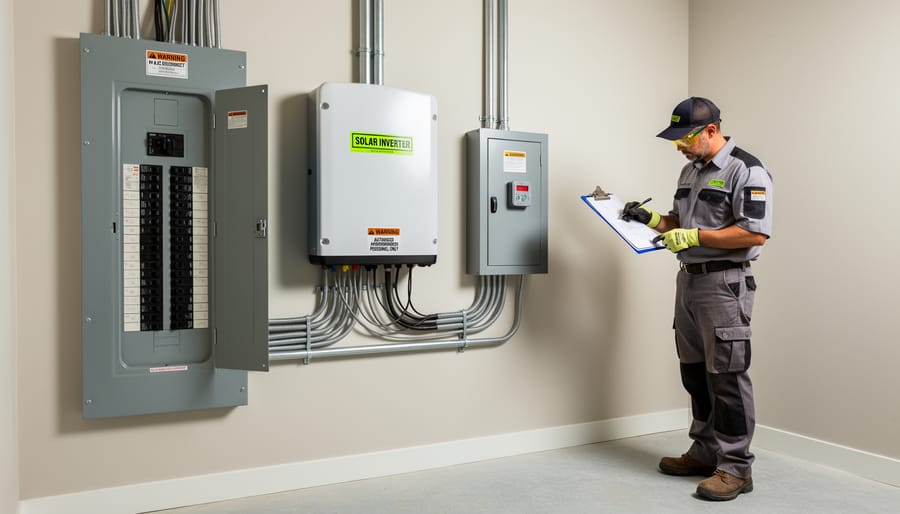
The installation process demands more than basic home improvement skills. You’ll work with high-voltage DC electricity, navigate structural load calculations, properly flash roof penetrations to prevent leaks, and wire systems that meet the National Electrical Code. Many jurisdictions require licensed electricians to make the final grid connection regardless of who installs the panels. Without formal training, the kind that professionals gain through solar sales training programs and apprenticeships, even experienced DIYers face a steep learning curve that can stretch a weekend project into months of troubleshooting.
Permit requirements present another hurdle. Most municipalities require building permits, electrical permits, and utility interconnection approvals before you can legally energize a solar system. Inspectors scrutinize DIY work more carefully than installations by licensed contractors, and failed inspections mean pulling permits again, correcting work, and scheduling new inspections. Some areas won’t issue solar permits to non-licensed installers at all, making DIY installation legally impossible.
Before committing to the DIY path, work through these considerations systematically:
- Assess your technical skills and electrical knowledge honestly, can you safely work with 600-volt DC systems and understand circuit design?
- Research local permitting and inspection requirements; call your building department to confirm they allow homeowner-installed solar.
- Calculate equipment-only costs versus full installation quotes from at least three certified contractors to verify actual savings.
- Evaluate warranty coverage differences; many panel manufacturers void warranties on self-installed systems or require professional certification.
- Consider roof safety and insurance implications; falls from roofs cause thousands of injuries annually, and some homeowners insurance policies exclude coverage for DIY electrical work.
- Factor in time investment and opportunity cost; what you save in installation fees may cost you weeks of labor and lost income.
Warranty protection represents one of the costliest DIY compromises. Professional installers typically guarantee their workmanship for 10-25 years and carry liability insurance that covers roof damage or electrical fires. Self-installed systems leave you shouldering those risks entirely. Equipment warranties often require proof of certified installation, meaning a $300 inverter failure five years down the line becomes your full financial responsibility rather than a warranty replacement.
The policy landscape increasingly favors professional installation. Many states now require contractors to hold specialized solar licenses separate from general electrical licenses, reflecting the technical complexity involved. These licensing requirements exist to protect homeowners and ensure grid safety, but they also acknowledge that solar installation demands expertise beyond typical construction trades. The quality gap between amateur and professional work shows up in system performance, with improperly designed arrays producing 15-30% less electricity than optimized installations.
For most homeowners, professional installation delivers better long-term value despite higher upfront costs. You gain certified workmanship, full warranty protection, faster permitting, and systems designed to maximize production for your specific roof and shading conditions. The 26% federal tax credit applies to total installed cost including labor, meaning you recoup a portion of professional fees immediately. That said, electrically-skilled homeowners in permissive jurisdictions who invest serious time in research can successfully self-install, particularly on simple roof layouts with southern exposure and minimal shading.
Incentives and Programs That Lower Your Out-of-Pocket Cost
The sticker price of a solar installation tells only part of the story. Federal, state, and local programs can reduce your out-of-pocket expense by thousands of dollars, making the leap to renewable energy far more affordable than the initial numbers suggest.
The federal Residential Clean Energy Credit currently covers 30% of your total system cost, including equipment and installation labor. For a $21,816 system, that translates to a $6,545 tax credit you claim when filing your return. Unlike a deduction, this credit directly reduces the tax you owe, and any unused portion can roll forward to future years. This single program alone brings the effective cost of that 7.2 kW system down to around $15,271.
State and utility rebates stack on top of the federal credit in many areas. Some states offer additional tax credits or cash rebates ranging from a few hundred to several thousand dollars, depending on system size and local policy priorities. Municipal utilities and rural electric cooperatives often run their own incentive programs, sometimes including performance-based payments that reward the clean energy your system generates over time. Regional variation is significant, so check with your state energy office and local utility to identify every program available where you live.
If rooftop installation isn’t feasible due to shading, roof condition, or rental status, community solar projects offer an alternative path to solar savings without the upfront installation cost. These shared arrays let you subscribe to a portion of a larger system and receive credits on your electricity bill.
Research available programs before you sign a contract. Installers should walk you through applicable incentives, but double-check eligibility requirements and application deadlines yourself. Advocating for expanded access to these programs at the local and state level helps ensure more homeowners can join the shift to sustainable energy.
Common Questions About Solar Installation Costs
Homeowners researching solar often share similar concerns in community discussions, and getting clear answers helps turn interest into informed action. Here are the questions that come up most frequently when people evaluate whether rooftop solar fits their budget and goals.
How long does it take to recoup the installation cost?
Most homeowners see payback in 6 to 12 years through electricity bill savings, depending on local utility rates, system size, and available incentives. After payback, the system continues generating free electricity for 15+ additional years of the typical 25-30 year panel lifespan.
Are solar installation prices rising or falling?
Solar costs have fallen dramatically over the past decade and have stabilized in the $2.58 to $2.75 per watt range in early 2026. While tariffs or supply chain issues can create short-term fluctuations, the long-term trend remains favorable for homeowners.
What ongoing maintenance costs should I budget?
Solar systems require minimal maintenance, typically just occasional panel cleaning and annual inspections. Most homeowners spend $150 to $300 per year, though warranty coverage often handles inverter replacements and major repairs at no cost.
How do I get accurate quotes for my specific home?
Request at least three quotes from certified installers who conduct on-site assessments of your roof, shading, electrical panel, and energy usage. Online marketplaces provide competitive pricing, but local contractors often understand regional permitting and can offer personalized service that larger companies cannot match.
Another common question centers on home value. Research consistently shows that solar installations increase property resale value, often by amounts comparable to the system cost. Buyers appreciate lower utility bills and the environmental benefits, making solar-equipped homes more attractive in competitive markets.
Payment timelines also generate questions. Most installers require a deposit (typically 10-20% of total cost) when you sign the contract, with the remainder due at project milestones or completion. Cash buyers pay once, while financed systems involve monthly loan payments that often match or beat the eliminated electricity bills, making the transition budget-neutral from day one.
For households where upfront costs remain a barrier, community solar programs expand clean energy access by allowing subscriptions to shared solar arrays without rooftop installation. These arrangements eliminate installation costs entirely while still delivering monthly savings, demonstrating that sustainable energy solutions can fit various financial situations and housing types.
Rooftop solar installation is a significant financial commitment, with systems ranging from $15,000 to over $36,000 before incentives in 2026. But this upfront investment tells only part of the story. When you factor in federal tax credits, state rebates, local utility programs, and the long-term savings on electricity bills, solar becomes far more accessible than many homeowners initially expect. Prices have been falling steadily, and with marketplace averages now hovering around $2.58 to $2.75 per watt, the barrier to entry continues to lower.
The path forward starts with gathering multiple quotes from certified installers in your area. Compare not just the bottom-line price, but equipment quality, warranty terms, and installer experience. If a full rooftop system stretches beyond your budget, explore community solar programs that put clean energy within every home owner’s reach without requiring roof ownership or upfront capital.
Every solar installation adds momentum to the renewable energy movement. As more households make this transition, we collectively reduce demand for fossil fuels, strengthen local grid resilience, and demonstrate that sustainable living is both practical and achievable. Your decision to invest in solar contributes to a cleaner environment for your community and future generations. The numbers make sense, the technology works, and the time to join this movement is now.